Waterfalls
2026 (June 23 2026)Commemorative
Designed by Studio Mean
Size 35mm (h) x 37mm (v)
Printed by Cartor Security Print
Print Process Lithography
Perforations 14.5 x 14
Gum PVA
Stamps

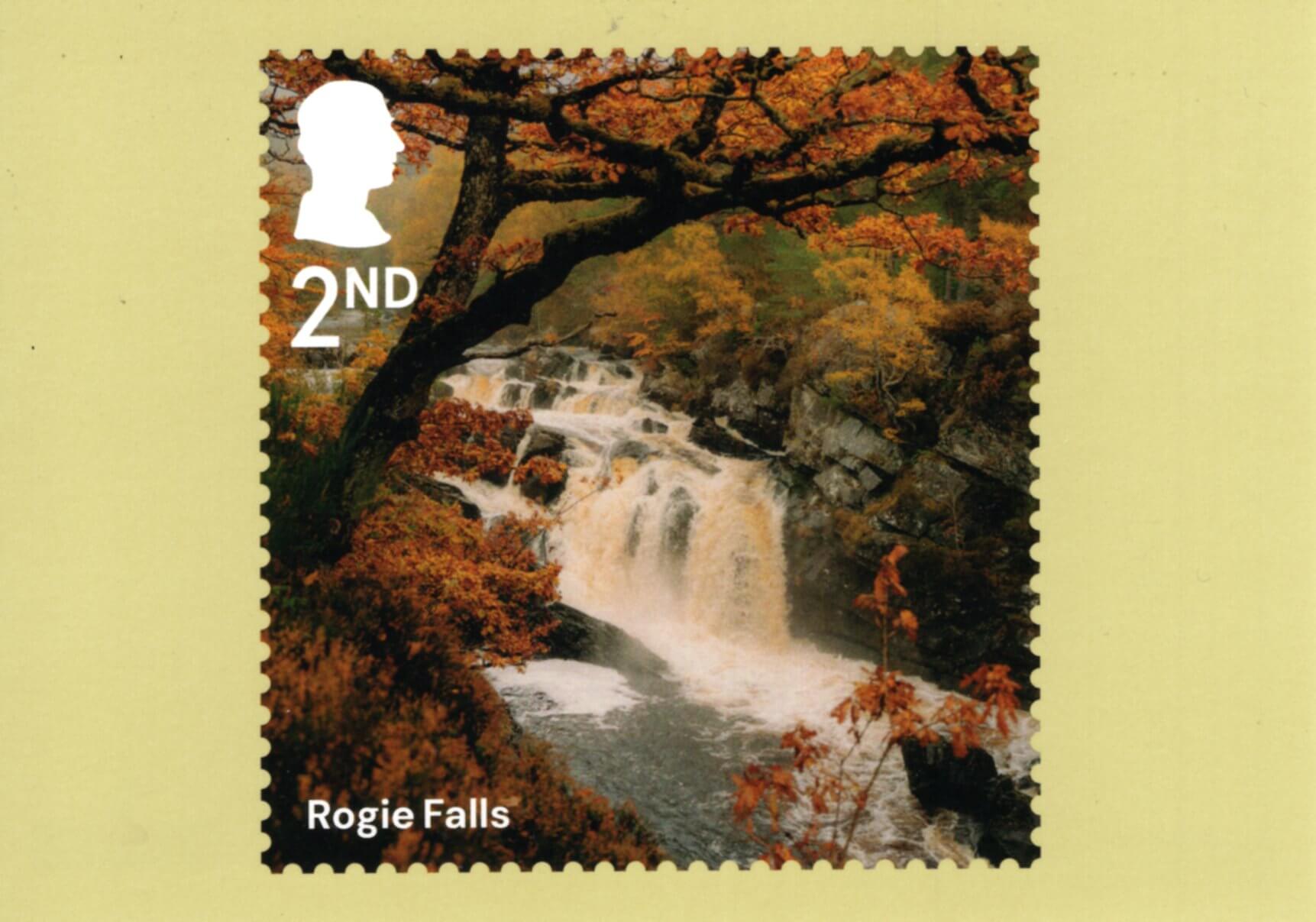
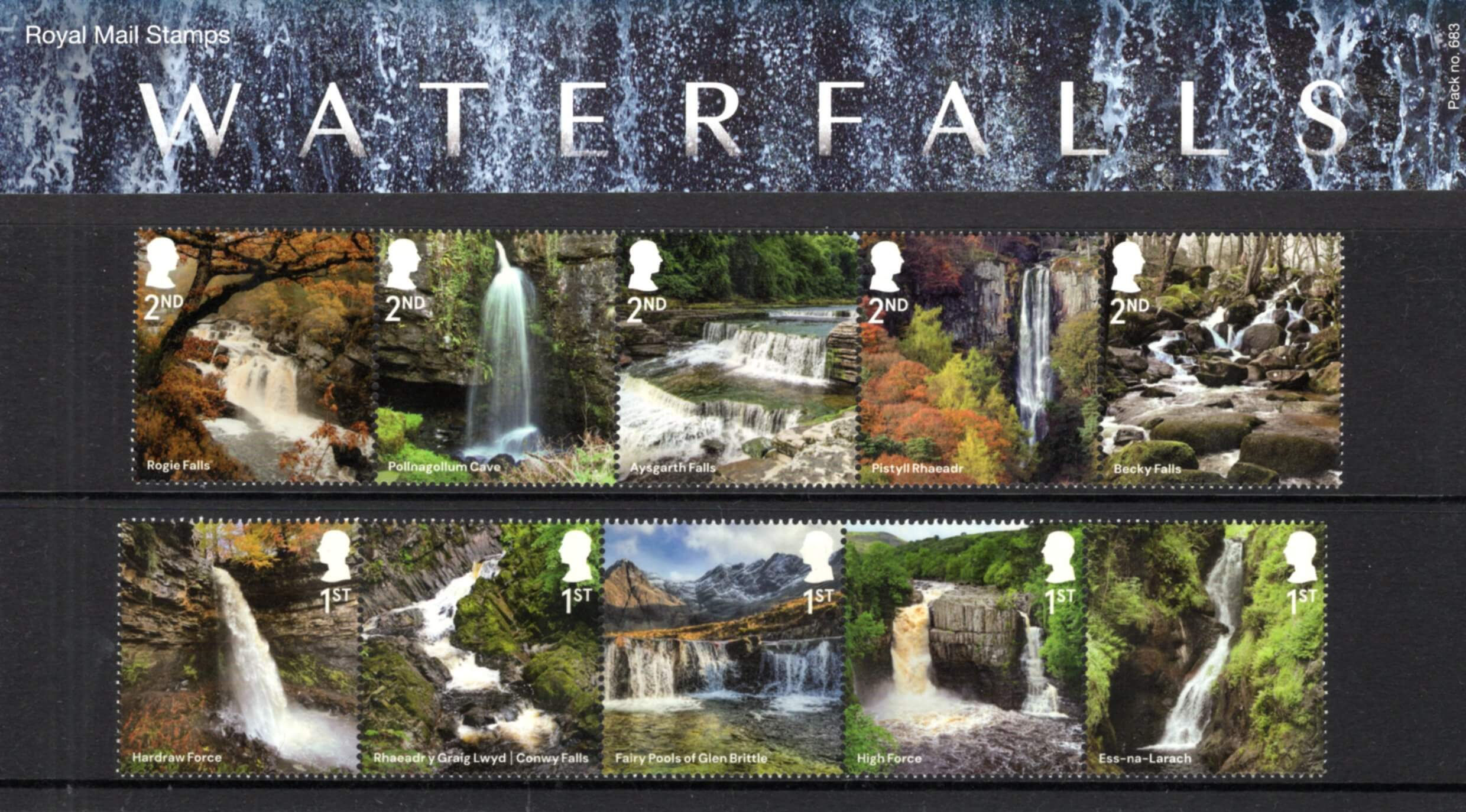
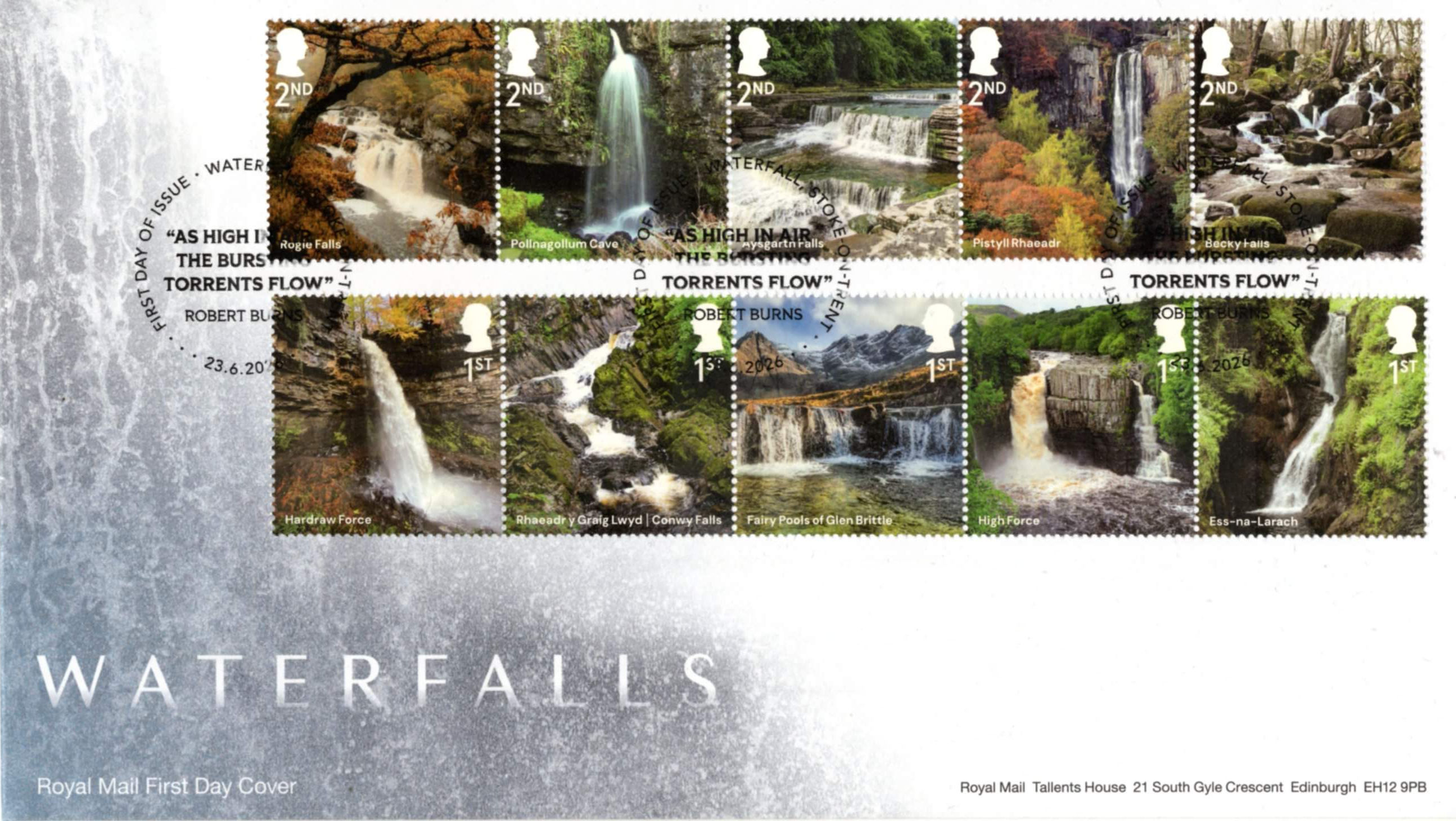
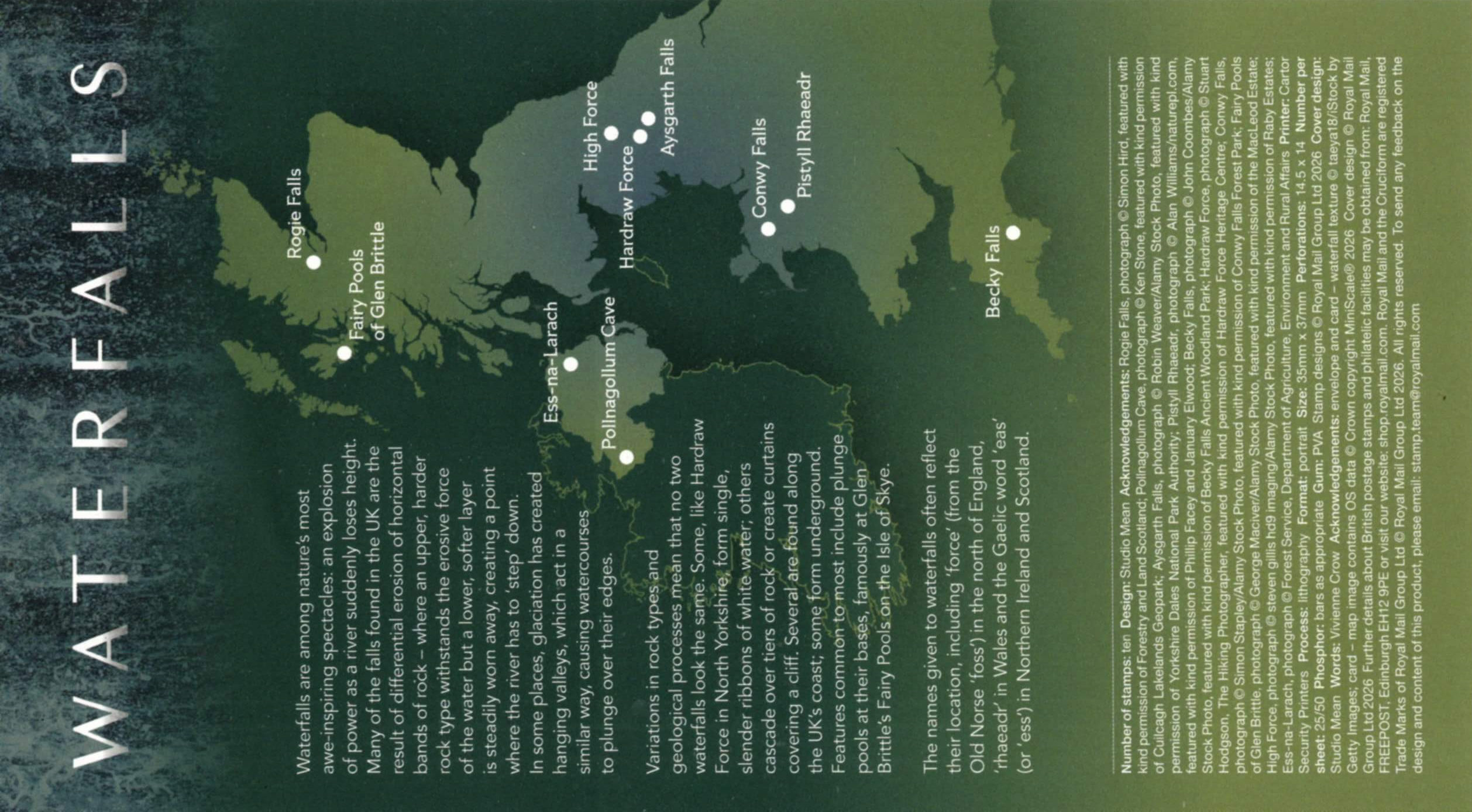
Rogie Falls, Scottish Highlands
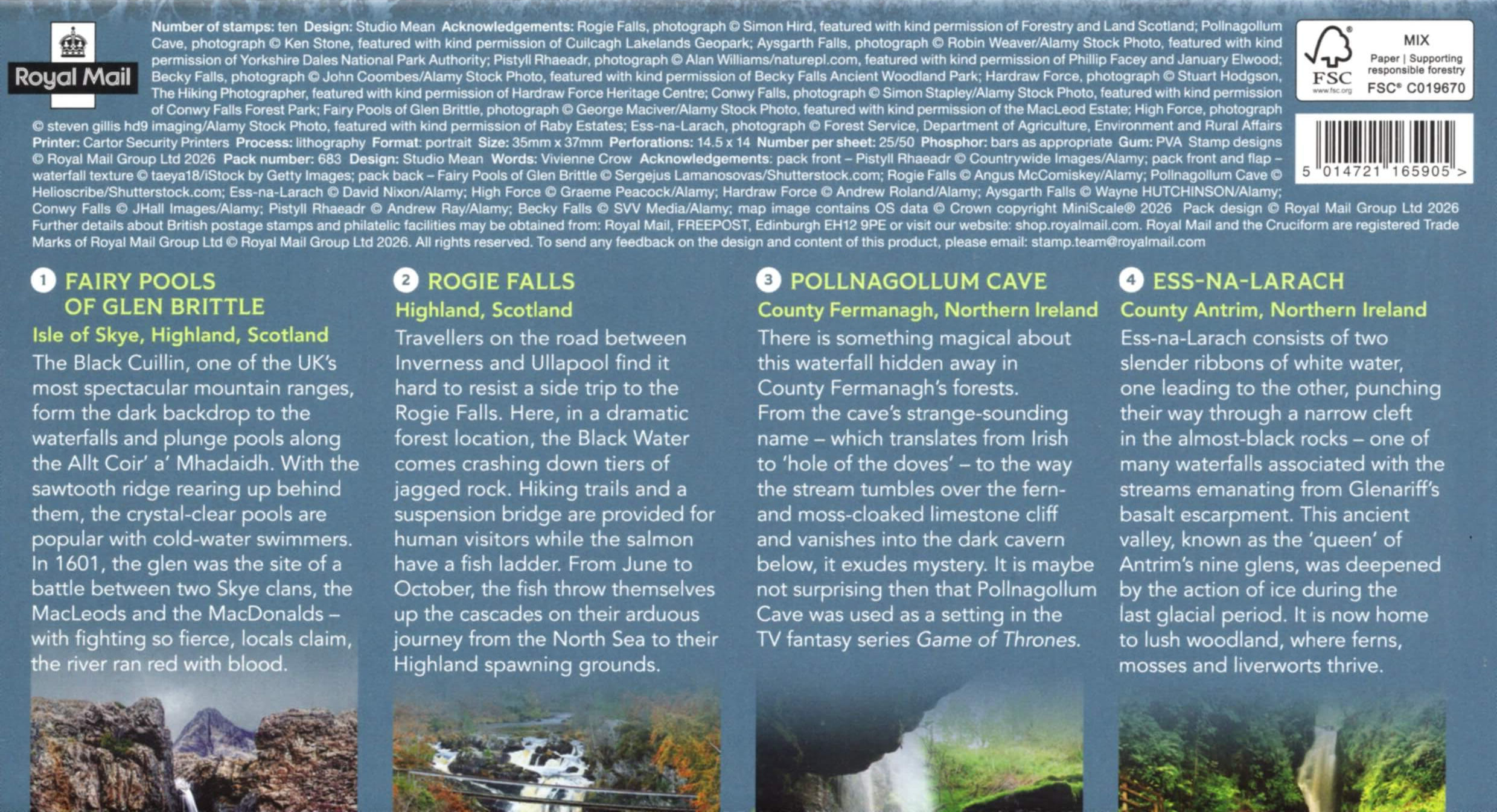
2ndTravellers on the road between Inverness and Ullapool find it hard to resist a side trip to the Rogie Falls. Here, in a dramatic forest location, the Black Water comes crashing down tiers of jagged rock. Hiking trails and a suspension bridge are provided for human visitors while the salmon have a fish ladder. From June to October, the fish throw themselves up the cascades on their arduous journey from the North Sea to their Highland spawning grounds.

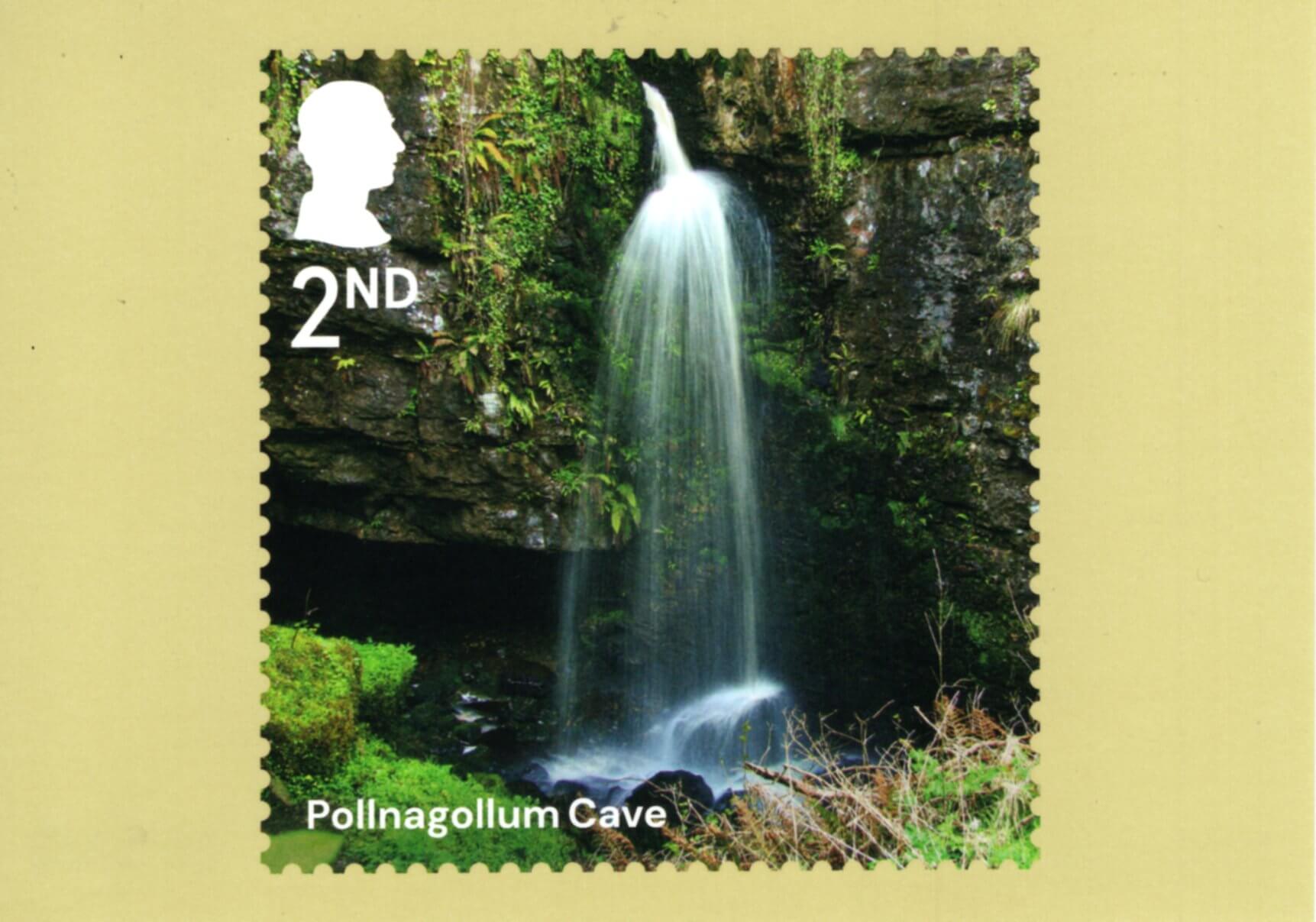
Pollnagollum Cave, County Fermanagh
2ndThere is something magical about this waterfall hidden away in County Fermanagh’s forests. From the cave’s strange-sounding name – which translates from Irish to ‘hole of the doves’ – to the way the stream tumbles over the fern and moss-cloaked limestone cliff and vanishes into the dark cavern below, it exudes mystery. It is maybe not surprising then that Pollnagollum Cave was used as a setting in the TV fantasy series Game of Thrones.

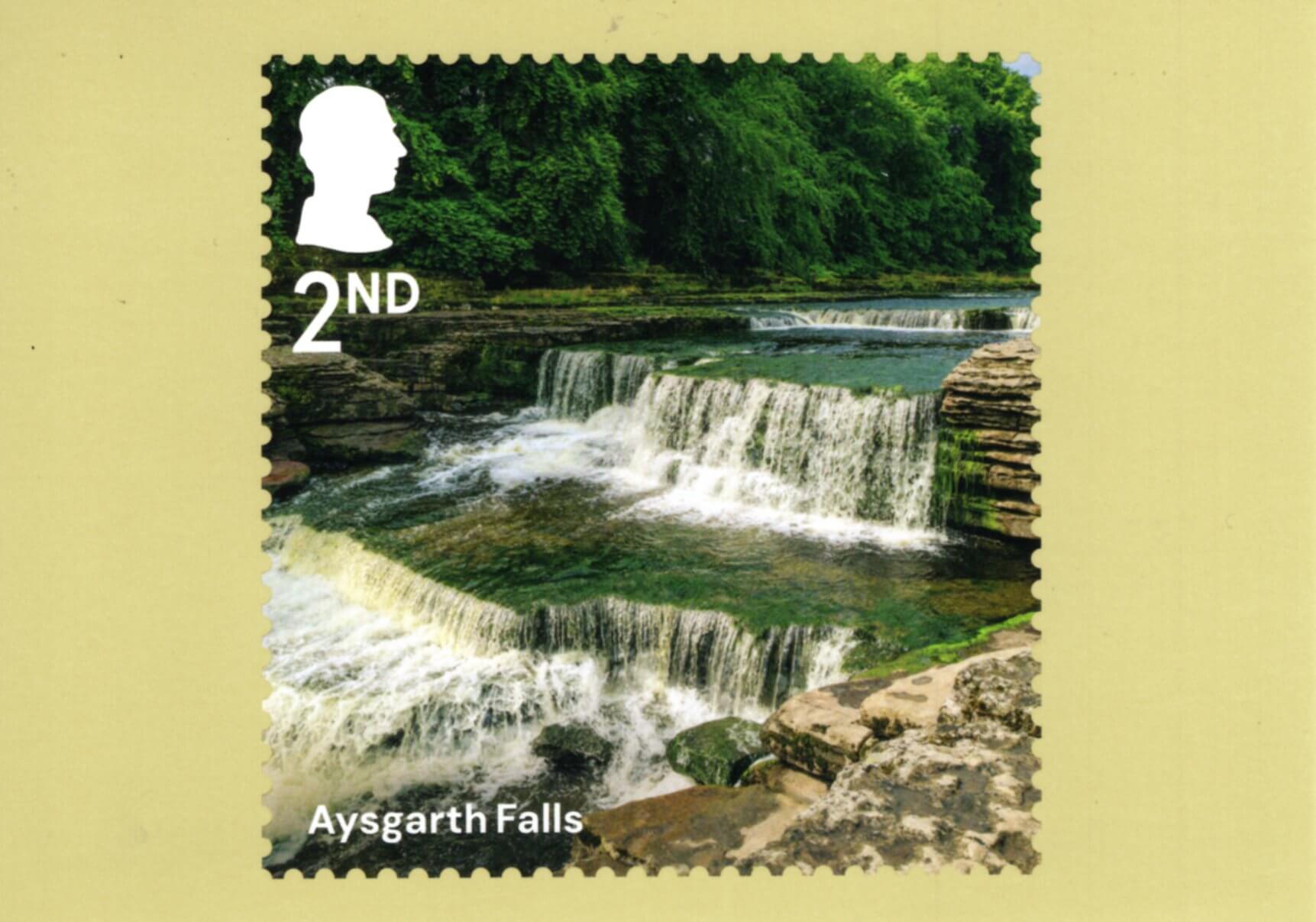
Aysgarth Falls, North Yorkshire
2ndAysgarth Falls form as Wensleydale’s River Ure spills down tiers of rock formed from horizontal layers of hard Carboniferous limestone alternating with bands of softer shale. The river’s sudden drop in height is a result of differential erosion caused during the last glacial period. Sketched by JMW Turner, visited by William Wordsworth and used as a setting in the 1991 film Robin Hood: Prince of Thieves, the falls remain a popular Yorkshire Dales attraction.

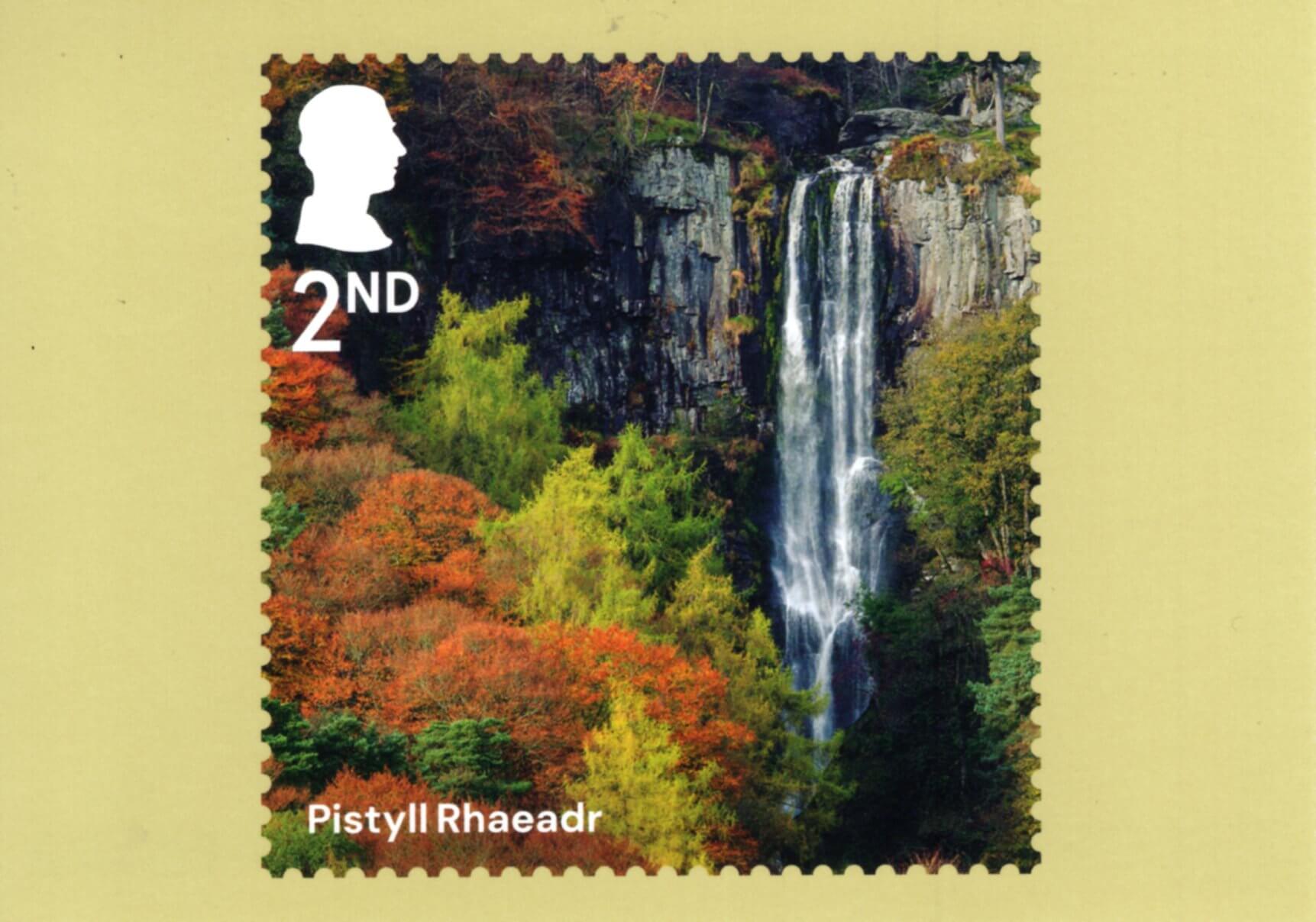
Pistyll Rhaeadr, Powys
2ndPlunging from Y Berwyn (the Berwyn range of hills), Pistyll Rhaeadr consists of three falls dropping a massive 75 metres in total. Birch, oak and pine trees cling to the steep cliffs, while the base of the waterfall is littered with boulders that were dropped, according to legend, by a giant called Cawr Berwyn. One of Pistyll Rhaeadr’s most unusual features is the eroded rock about halfway up, forming a natural ‘bridge’ across the stream.

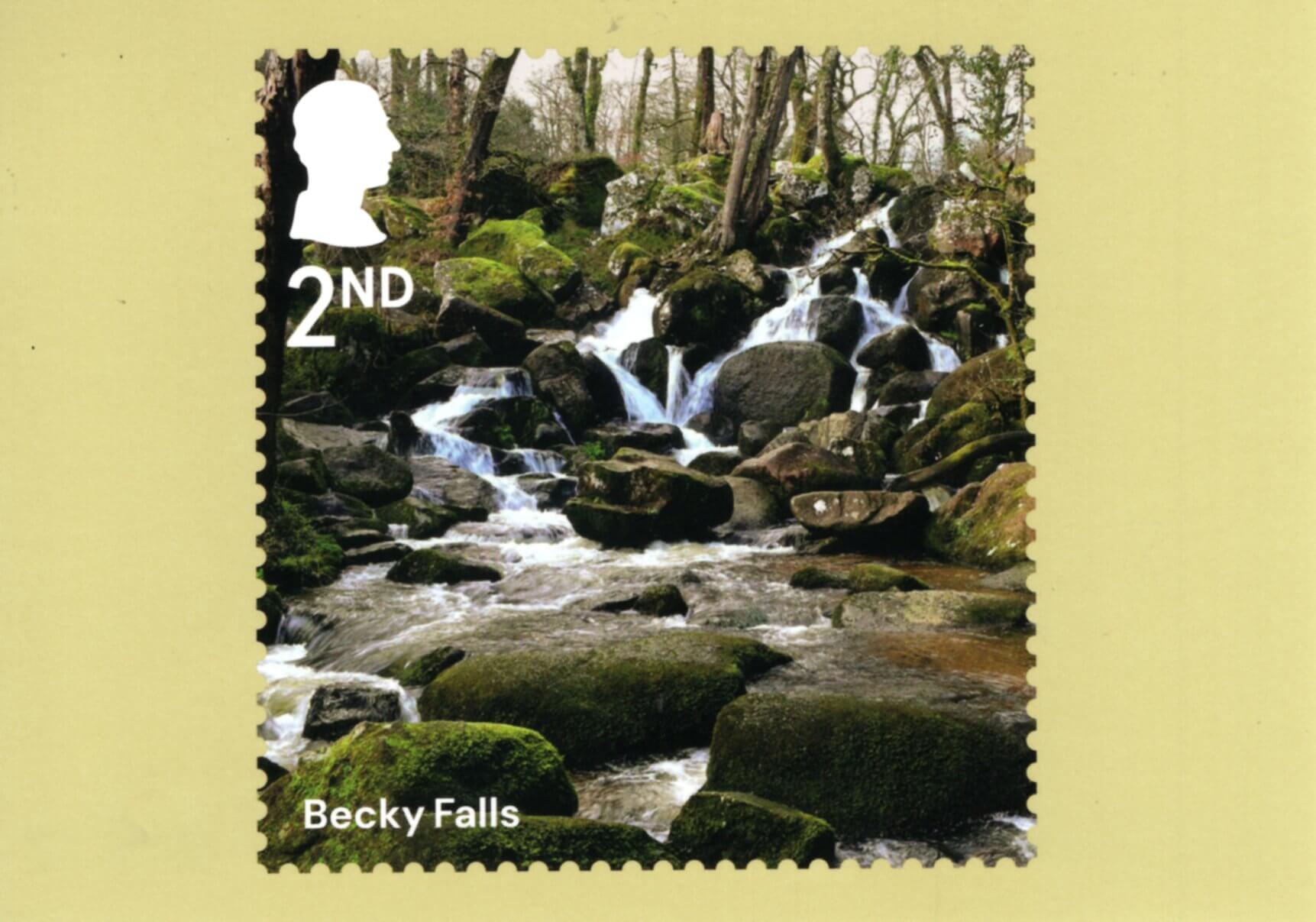
Becky Falls, Devon
2ndBecka Brook is a tributary of Dartmoor’s River Bovey, located in ancient oak woodland that is home in springtime to dazzling bluebell displays. Just before entering the river, the brook tumbles down a boulder-filled section of this enchanting side valley. It splits on myriad occasions as it flows between the enormous, moss-clad lumps of granite spread across the 10-metre-wide channel.

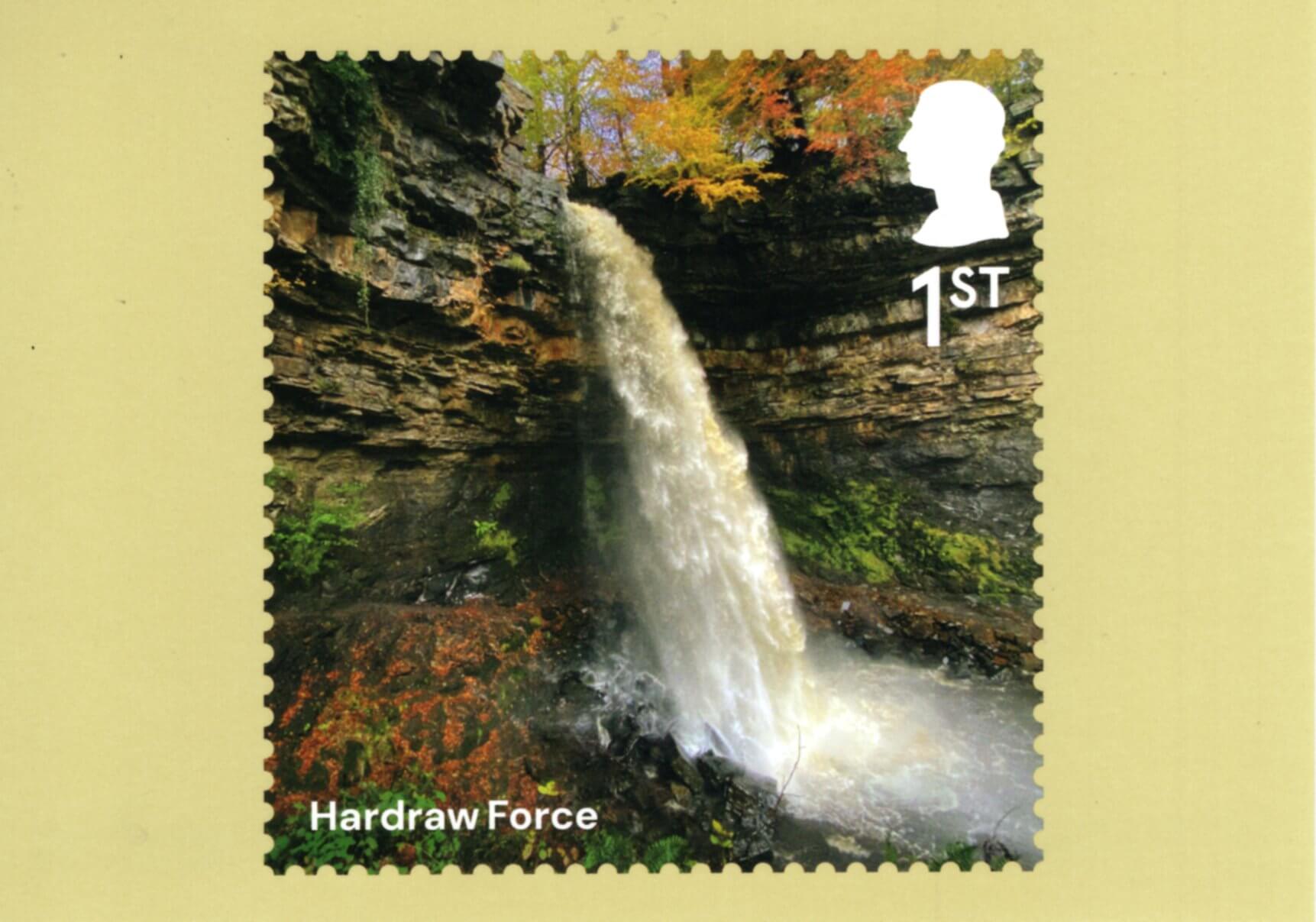
Hardraw Force, North Yorkshire
1stReputedly England’s highest single-drop, above-ground waterfall, Hardraw Force plummets more than 30 metres over a limestone lip, eroding softer rocks below to create an overhang. In 1799, William Wordsworth described the resulting recess as “lofty and magnificent”. Today, visitors to this dark amphitheatre are warned not to walk behind the veil of water because of the precarious nature of this overhang.

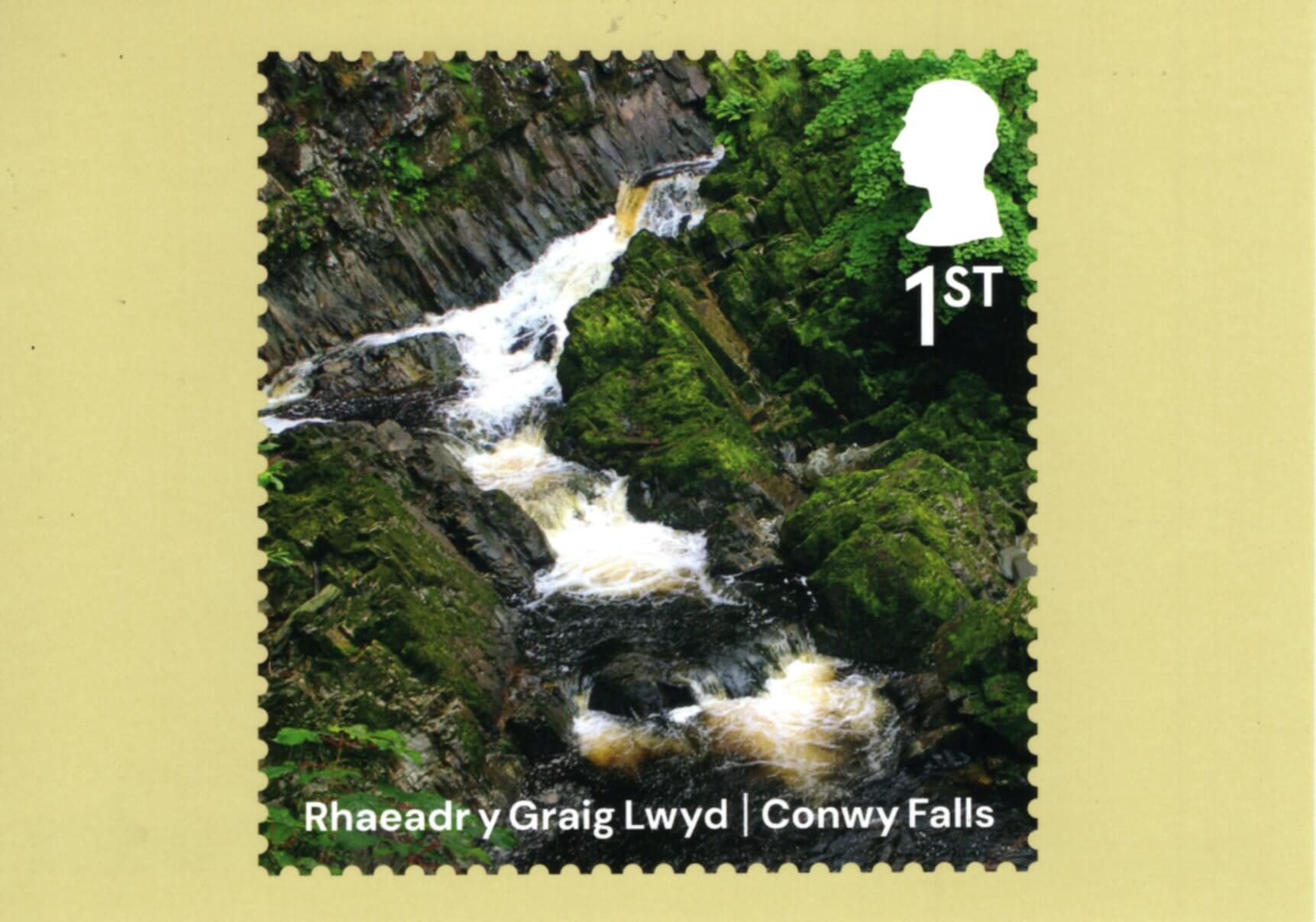
Rhaeadr y Graig Lwyd, Conwy
1stOn the eastern edge of Eryri (Snowdonia), where the volcanic rocks of the mountains give way to a gentler landscape associated with sandstones and other sedimentary rocks, the River Conwy forces its way through a narrow, snaking gorge. It splits as it loses height, the two white-water arms of Conwy Falls divided by a chunk of rock – hence the Welsh name, Rhaeadr y Graig Lwyd, which translates as ‘Falls of the Grey Rock’.

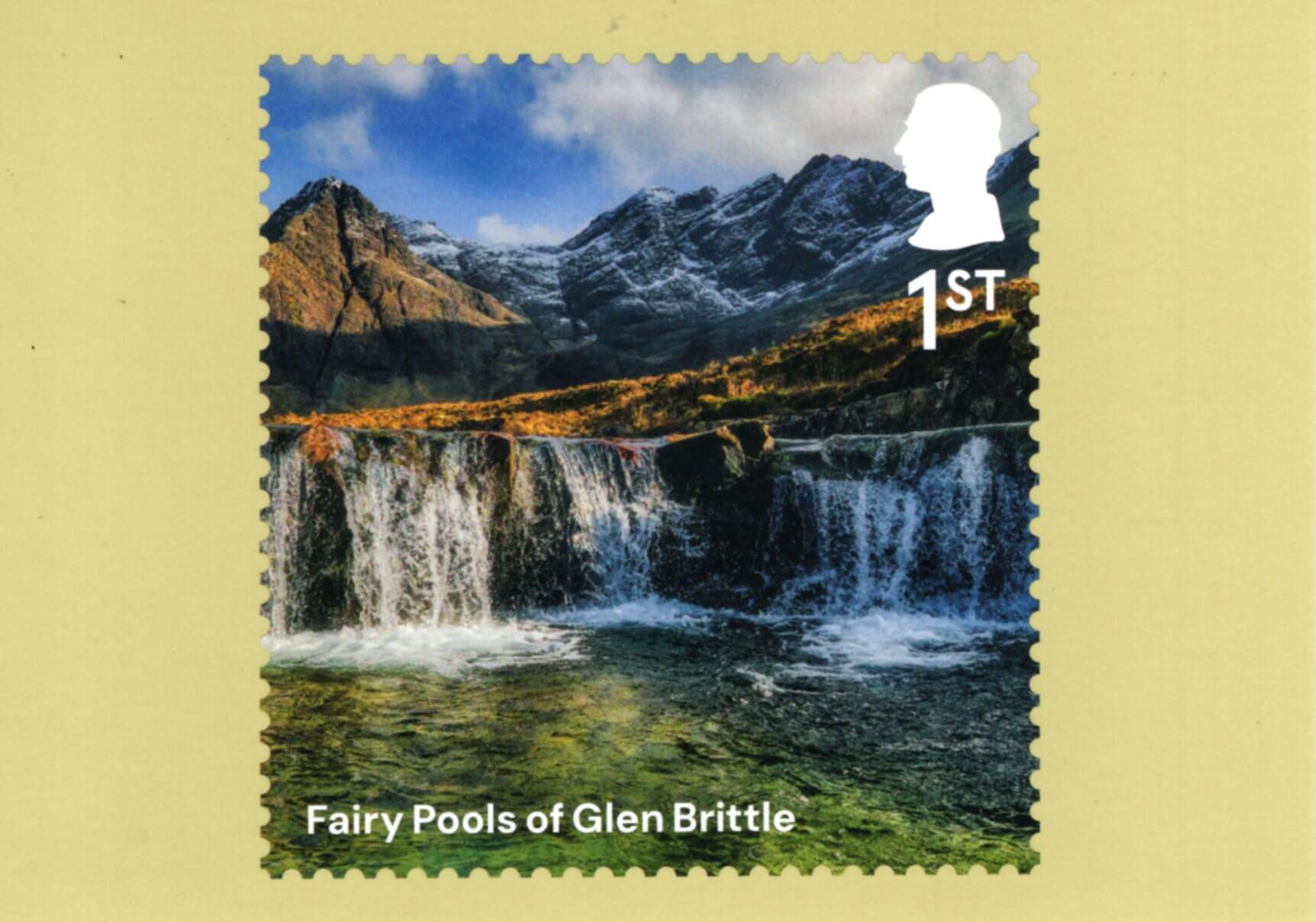
Fairy Pools of Glen Brittle, Isle of Skye
1stThe Black Cuillin, one of the UK’s most spectacular mountain ranges, form the dark backdrop to the waterfalls and plunge pools along the Allt Coir’ a’ Mhadaidh. With the sawtooth ridge rearing up behind them, the crystal-clear pools are popular with cold-water swimmers. In 1601, the glen was the site of a battle between two Skye clans, the MacLeods and the MacDonalds – with fighting so fierce, locals claim, the river ran red with blood.

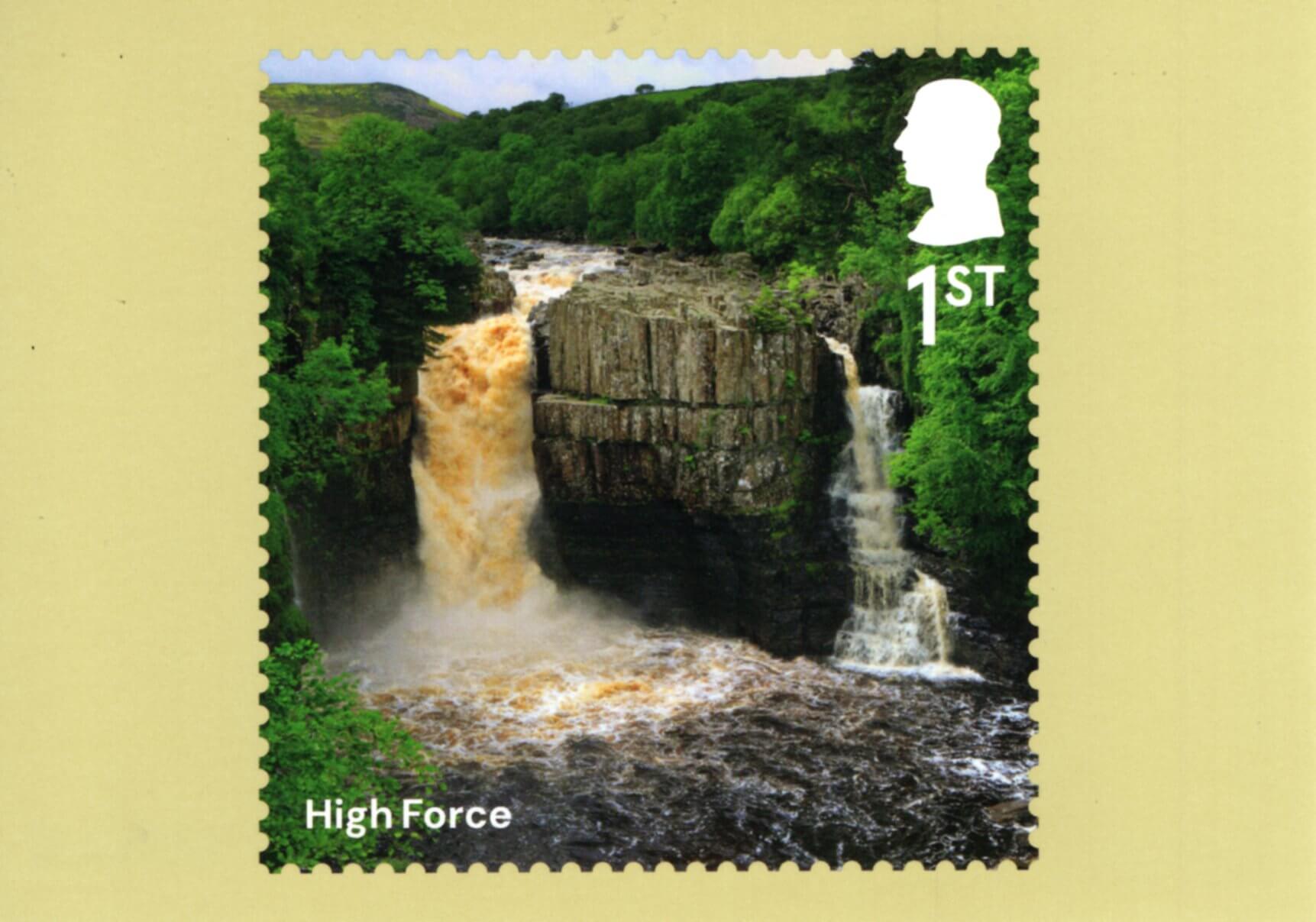
High Force, County Durham
1stAs the River Tees comes hurtling down from its North Pennines source, it plunges about 21 metres over an almost vertical cliff. After heavy rain, the peat-laden river splits, forming two falls divided by a protruding buttress, but even this rock can be covered in exceptional weather. England’s most powerful waterfall in terms of volume, High Force is slowly moving upstream as it erodes the sedimentary rocks beneath the Whin Sill – the hard-wearing layer of rock over which the River Tees initially flows.

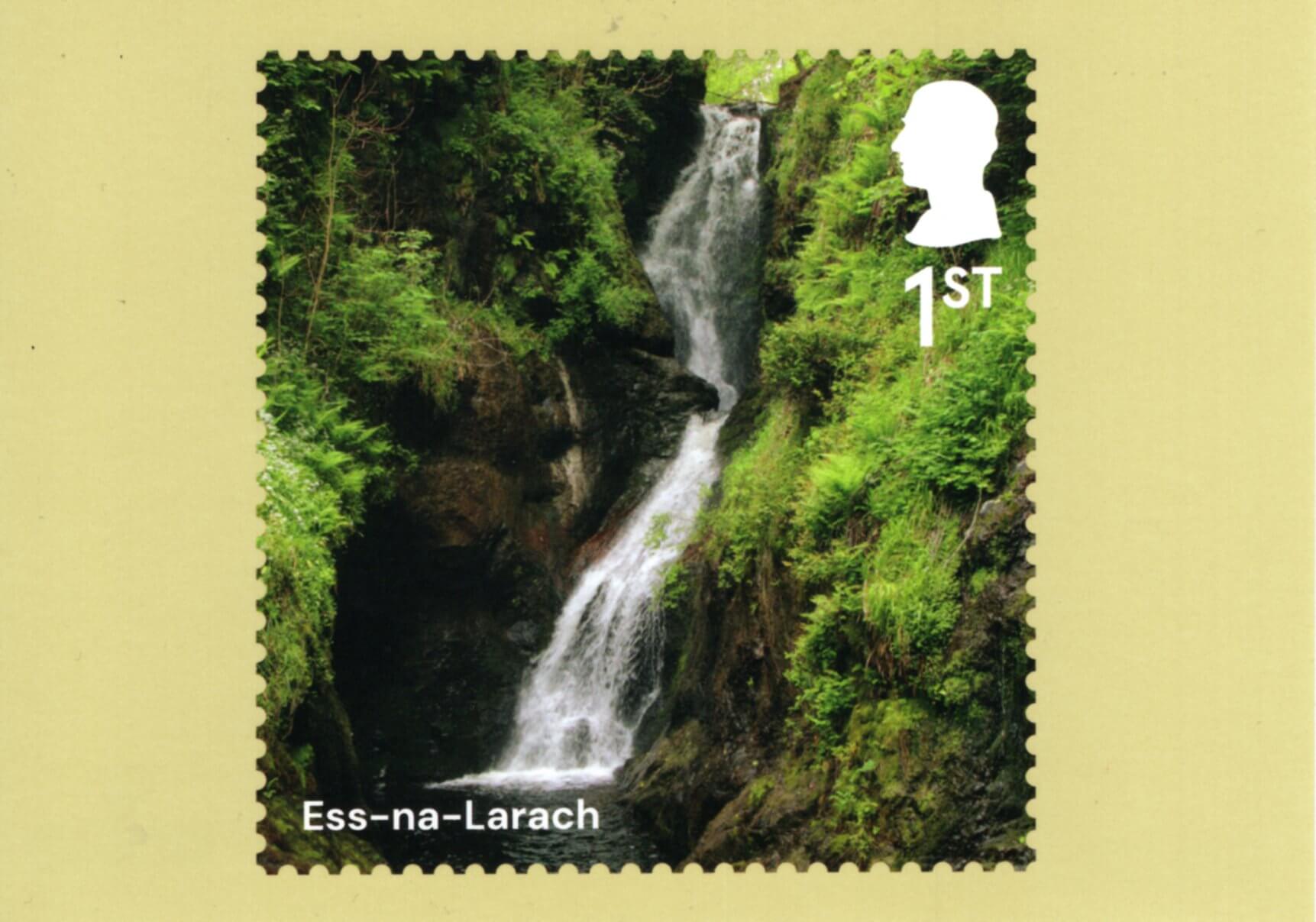
Ess-na-Larach, County Antrim
1stEss-na-Larach consists of two slender ribbons of white water, one above the other, punching their way through a narrow cleft in the almost-black rocks – one of many waterfalls associated with the streams emanating from Glenariff’s basalt escarpment. This ancient valley, known as the ‘queen’ of Antrim’s nine glens, was deepened by the action of ice during the last glacial period. It is now home to lush woodland, where ferns, mosses and liverworts thrive.
Presentation Pack
Pack 683
RM Code AP569
First Day Cover
RM Code AP549
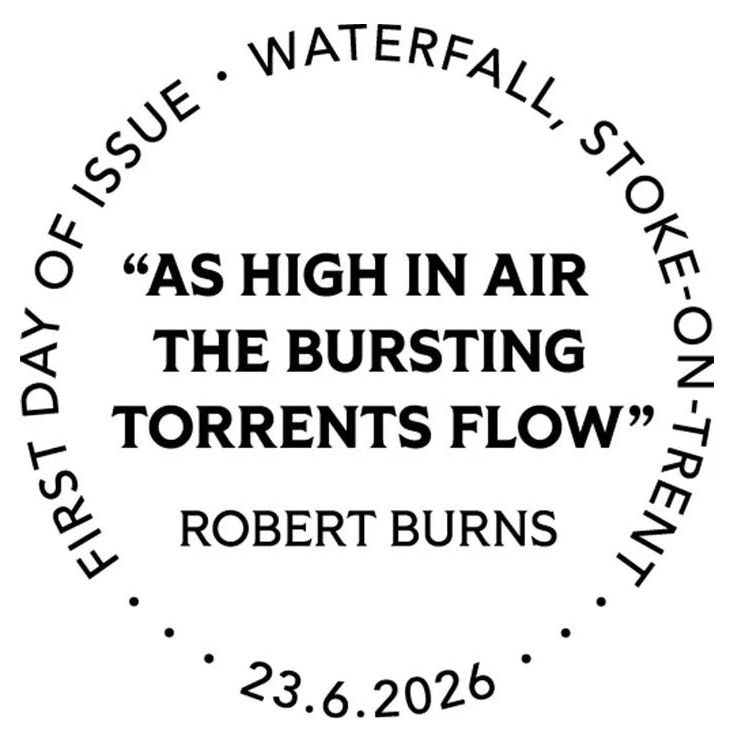
Postmark
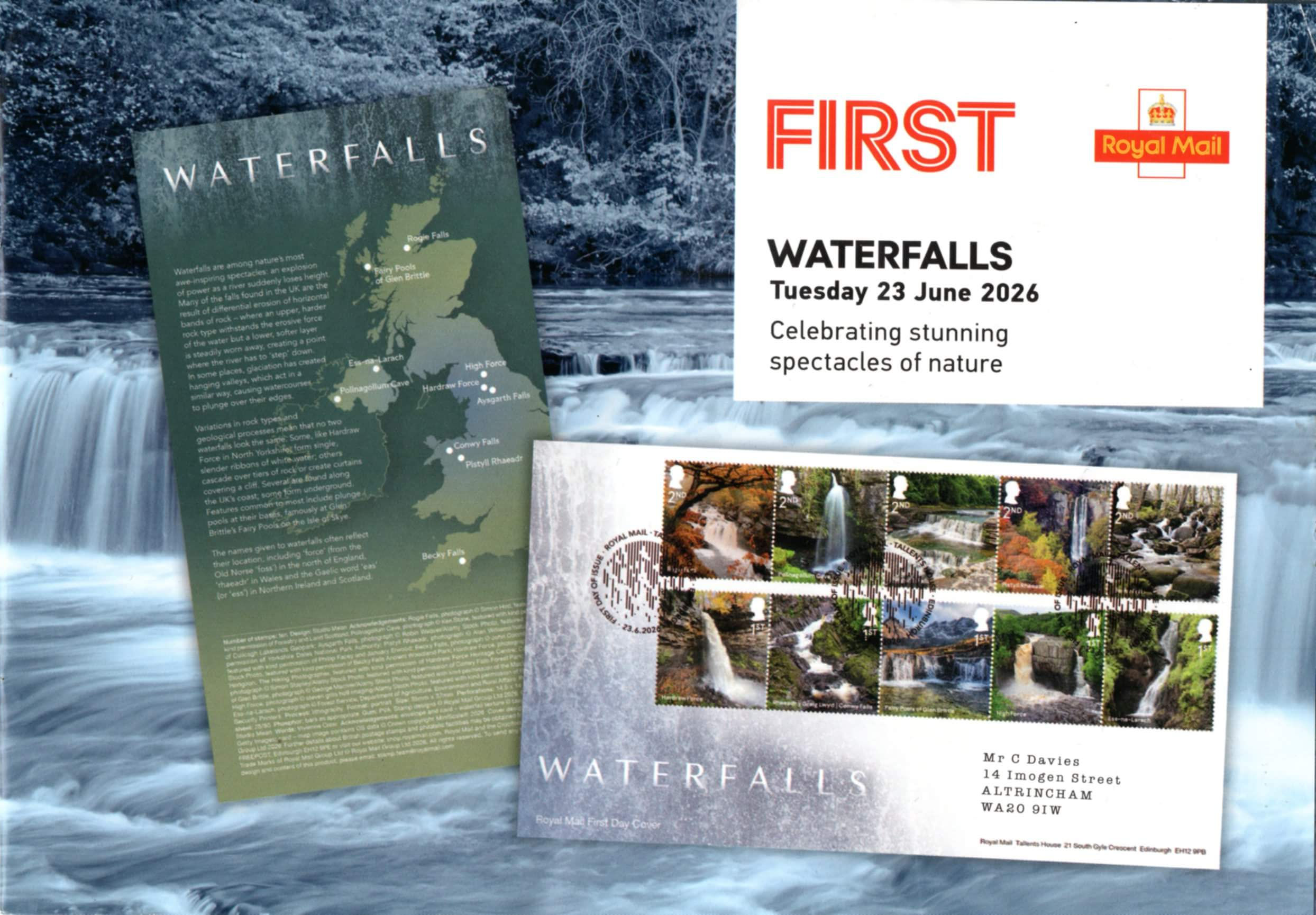
Publicity - First
PHQ Cards
Pack PHQ563
RM Code AQ385